
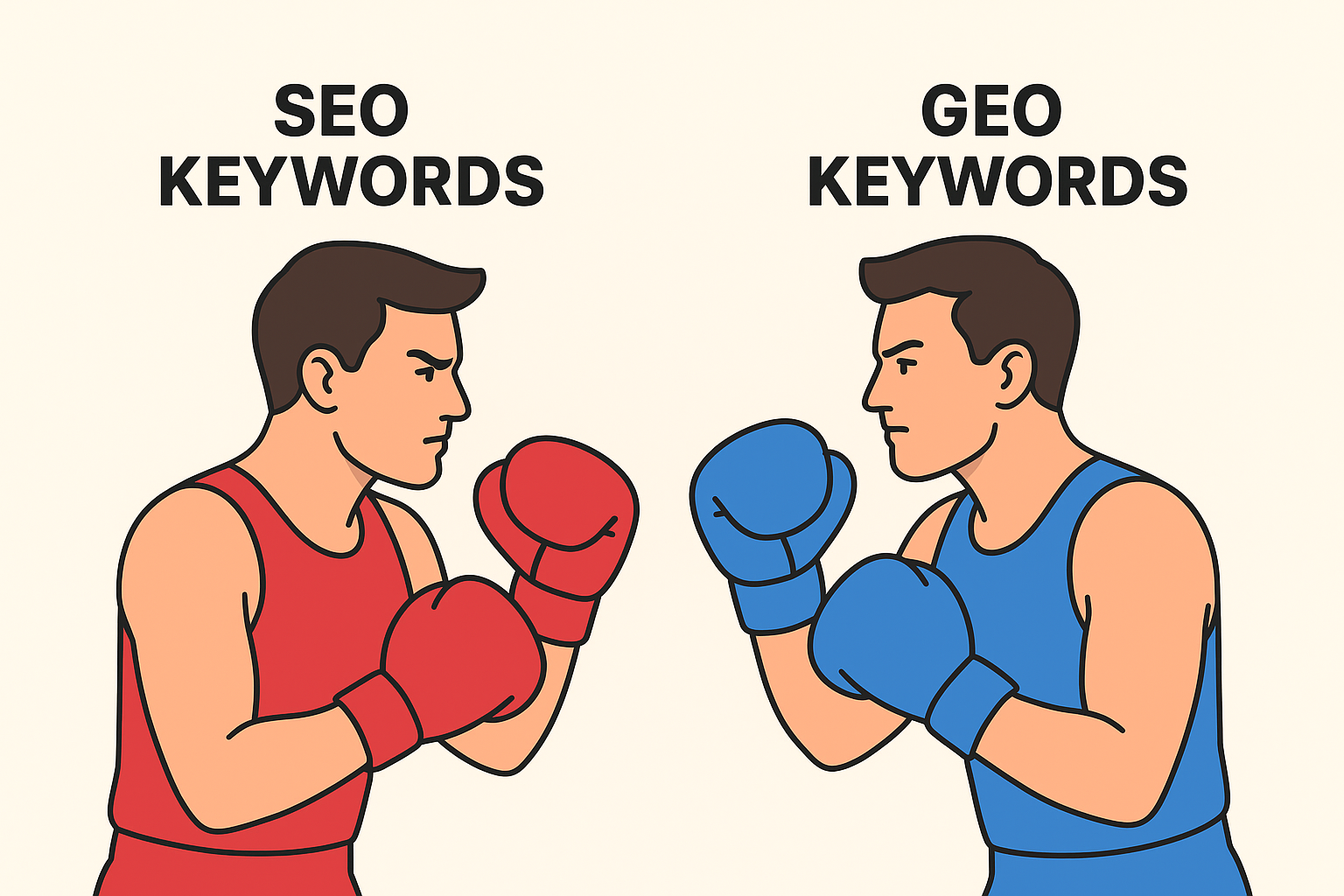
SEO vs. GEO: 15 Key Differences Despite the Similarities
Search Engine Optimisation (SEO) and Geographical Optimisation (GEO) are two terms often used interchangeably, yet they are not the same. Both aim to increase visibility and engagement, but they work in distinct ways.
If you’re a business trying to attract more customers online, understanding the differences between SEO and GEO will help you build a sharper, more effective marketing strategy. Below, we’ll unpack both concepts, explain why they’re confused, and break down 15 key differences you need to know.
1. What is SEO?
SEO (Search Engine Optimisation) is the process of improving your website’s visibility on search engines such as Google and Bing. The goal is to rank higher for search terms relevant to your products or services.
SEO involves a mix of:
-
Keyword research
-
On-page optimisation (titles, meta descriptions, headings)
-
Technical SEO (sitemaps, structured data, page speed)
-
Content creation and link building
-
User experience enhancements
Example: Optimising a blog post for “London digital marketing agency” so it appears on Google’s first page.
Need help with SEO? Our SEO services at Tron Media are designed to improve your visibility, attract qualified leads, and drive measurable results.
2. What is GEO?
GEO, short for Geographical Optimisation (sometimes called geo-targeting), is the practice of tailoring your online content, ads, or services based on a user’s physical location.
This could mean:
-
Serving different landing pages to users in different cities
-
Showing local office hours depending on a visitor’s time zone
-
Targeting paid ads to people within a specific radius
Example: Displaying different homepage offers to users in Manchester vs. London.
GEO is broader than local SEO. While local SEO is about ranking locally in search results, GEO includes paid ads, apps, and even dynamic website content.
3. Why People Confuse SEO and GEO
Both strategies share a common goal — better visibility and engagement. Both use data, analytics, and audience research. However:
-
SEO is about ranking for keywords in search engines.
-
GEO is about personalising experiences by location.
They’re complementary, but not interchangeable.
4. 15 Key Differences Between SEO and GEO
| # | Aspect | SEO (Search Engine Optimisation) | GEO (Geographical Optimisation) |
|---|---|---|---|
| 1 | Core Goal | Improve rankings in search engines | Deliver content based on location |
| 2 | Scope | Global, national, or local search | Location-specific targeting |
| 3 | Channels | Organic search (Google, Bing) | Paid ads, websites, apps, email, SEO |
| 4 | Data Focus | Keywords, backlinks, UX signals | IP, GPS, device location data |
| 5 | Tools | Google Search Console, SEMrush, Ahrefs | Google Ads geo settings, CDNs, GeoIP databases |
| 6 | Timeline | Long-term growth | Immediate targeting |
| 7 | Personalisation | Keyword intent & UX | Regional content & offers |
| 8 | Metrics | Rankings, traffic, CTR, conversions | Location-based CTR, footfall, store visits |
| 9 | Content | Optimised blog posts, meta tags | Dynamic location pages, personalised banners |
| 10 | Technical Setup | Structured data, sitemaps | Geo-redirects, CDN edge rules |
| 11 | Cost | Organic investment in time & resources | Often paid media or tech cost |
| 12 | Compliance | Google’s quality guidelines | GDPR & privacy laws for location data |
| 13 | Competition | Other sites for SERP position | Other businesses in the same region |
| 14 | User Impact | Improves discoverability | Increases relevance & conversion |
| 15 | Example Use Case | Rank nationally for “UK tax accountant” | Show local office hours in user’s timezone |
5. Similarities Between SEO and GEO
Despite their differences, SEO and GEO overlap in a few key areas:
-
Both aim to improve user experience and engagement
-
Both rely on data and analytics
-
Both can be combined for powerful results (local SEO + geo-targeted content)
For example, a business can rank in local search results (SEO) while showing different offers or pages depending on a visitor’s region (GEO).
6. How to Decide Which to Use (or Combine)
If your goal is higher search rankings, focus on SEO.
If you want to customise experiences by location, invest in GEO.
For many businesses, the best approach is a hybrid, build a strong SEO foundation and then layer in geo-targeted landing pages, offers, or paid ads.
Example Internal Link Opportunities:
7. Best Practices for Combining SEO and GEO
-
Create separate landing pages for each location with unique, optimised content
-
Use structured data (schema markup) for local businesses and events
-
Tailor meta tags and headings for local keywords
-
Ensure GDPR compliance when collecting location data
-
Track both search metrics and geo-engagement metrics to measure ROI
This blend not only boosts your search rankings but also increases conversion rates by making your content more relevant to each visitor.
8. Final Thoughts
SEO and GEO share some DNA but serve distinct purposes. SEO boosts your discoverability across search engines. GEO makes your content more relevant to where your customers are.
Understanding the differences allows you to build a smarter, more personalised marketing strategy in 2025. By combining both, you can rank higher, convert more, and deliver better experiences to your audience.
FAQ Section
Q1. Is GEO the same as local SEO?
No. Local SEO is a subset of SEO focused on ranking in local searches. GEO covers any location-based content delivery or targeting, not just search.
Q2. Can you combine SEO and GEO?
Yes. Many businesses rank locally via SEO while showing different offers or pages depending on a visitor’s region.
Q3. What’s more cost-effective: SEO or GEO?
SEO typically has lower ongoing costs but takes time. GEO may deliver immediate results but often involves paid media or advanced tech.